

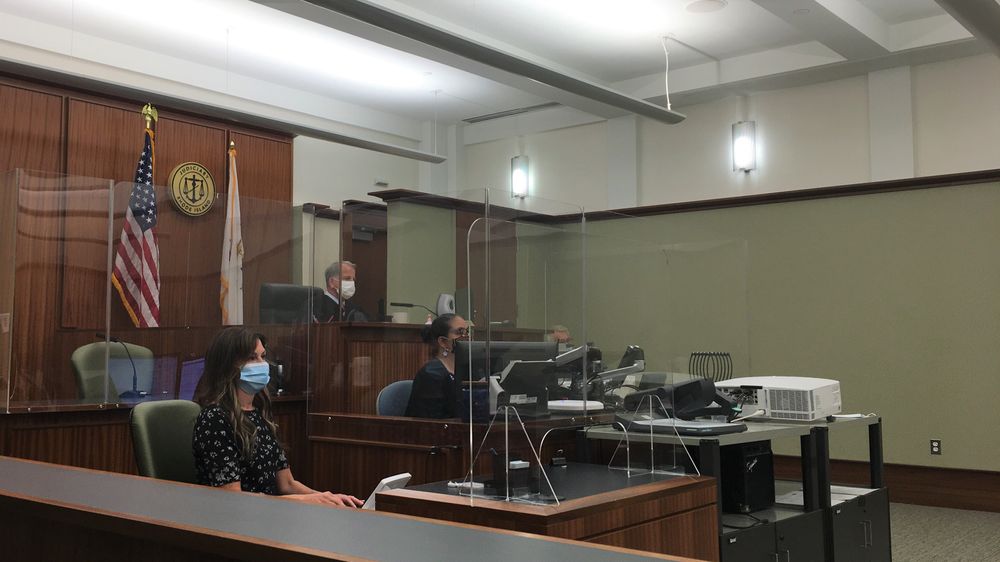
The Rhode Island Coastal Agency followed the law when it entered into mediation with a Block Island marina owner. That’s the decision released Thursday by Rhode Island Supreme Court Justice Jeffrey Lanphear.
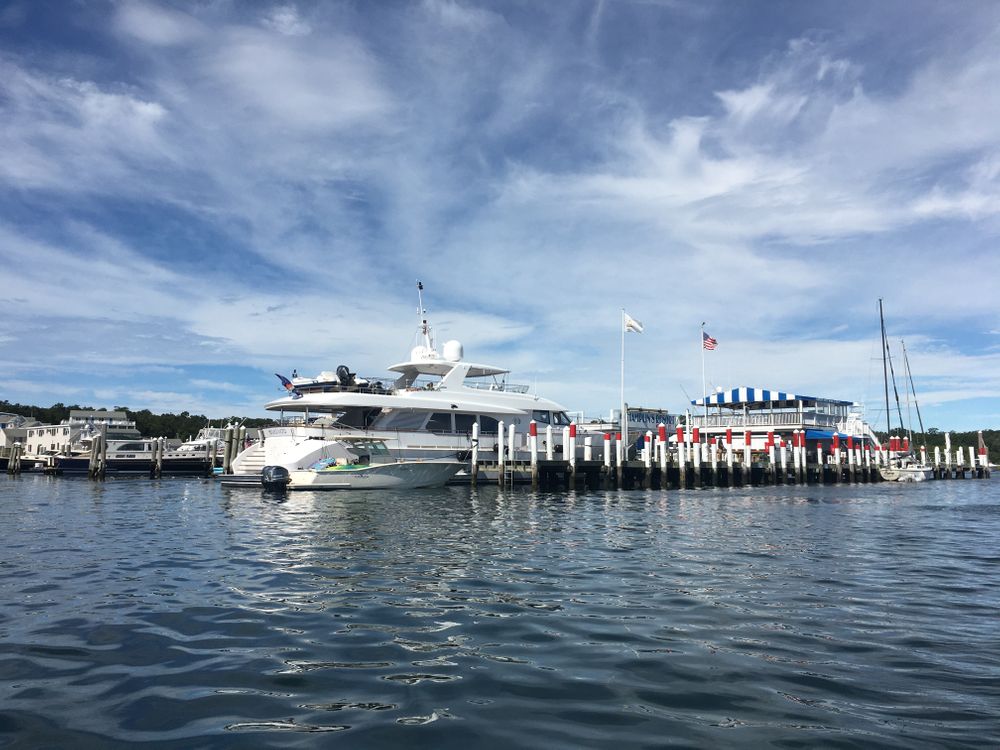
The mediation aimed to resolve an 18-year battle over Champlin’s Realty Associate’s proposal to extend its 240-foot marina into Block Island’s Great Salt Pond. Local groups said it would restrict public access and harm the pond’s ecology.
The State Coastal Resource Management Council denied Champlin’s application in 2006, and the two have been discussing the case ever since. Last November, CRMC voted to mediate with Champlin’s and the two struck a deal for a more limited expansion.
The mediation was challenged by the city of New Shoreham, several local environmental groups and Rhode Island Attorney General Peter Neronha. They argued that the mediation violated state law and CRMC policies because the agency did not allow public input and did not explain how the brokered deal addressed the reasons why the CRMC had previously denied the application.
The Supreme Court has rejected the concerns raised by these groups. Lanphear wrote that mediation “conforms to conventionally accepted standards of conduct.” But he left the door open to opponents of the marina expansion to challenge the “fairness and legality” of the agreement itself.
What’s in the decision?
The decision comes in response to a state Supreme Court custody order, which in June asked the Supreme Court to review “ownership and conclusiveness” of the brokered agreement.
Lanphear considered three main questions: Did CRMC and Champlin have the authority to mediate? Did they give enough notice? And is the deal a final decision?
On the issue of authority, Lanphear dismissed arguments that mediation should not have taken place because the case was waiting to be heard by the Supreme Court, which regularly encourages parties to resolve cases on their own, he noted.
“It is not unusual for jurors to be summoned, witnesses to be sued and [dates] fixed by the courts, when – on the morning of the trial – the court is told that the case has been resolved over the weekend, “he wrote.” Therefore, it strains credulity when the various interveners here, including the Attorney General, claim that it was inappropriate for the parties to even start discussions on the agreement. “
He also rejected arguments that opponents of the marina expansion were not informed of the mediation. As mediation is an informal process, he said there are no specific requirements on how the notice is given. And he pointed to several pieces of evidence that opponents were aware of the mediation, including a court filing by Champlin, the CRMC’s publicly available agendas and minutes, and phone calls from the mediator to the New Shoreham City attorney. .
“Due to the various communications and the informal nature of the mediation, this court finds that the city and the interveners have had sufficient notice of the mediation,” Lanphear wrote.
He also questioned the credibility of several witnesses from the city of New Shoreham, including the attorney and the city administrator.
On the fact that the agreement reached through mediation is final, Lanphear has left open the possibility of future challenges. He wrote that the parties who have been recognized as intervening by the courts – such as New Shoreham, several environmental groups and the state attorney general in this case – deserve a chance to hear their objections.
“This Court considers that such an opportunity has not yet been provided to the interveners here. A hearing should be held that gives them the opportunity to present evidence and raise their objections. “
The case now returns to the Supreme Court, which last spring rejected a joint motion to uphold the deal. According to court spokesman Craig Berke, the settlement should be accepted by the court to dismiss the case.
Response to the decision
The attorney representing Champlin’s, Robert Goldberg, applauded the decision and said he hoped “the ruling will resolve this 18-year-old dispute and will finally allow Champlin to move forward with its modest expansion that protects the environment while also providing a greater public access to the Gran Sale. Pond. “
But the mediation challengers called the decision flawed.
“The decision does not address the central issue, which is that the Supreme Court ruled more than 10 years ago that the clients I represent are full parties in this case,” said attorney Daniel Prentiss, who represents the City of New Shoreham, the Great Salt Pond Committee, the Block Island Land Trust, the Block Island Conservancy and the Conservation Law Foundation.
“It is universally accepted that an agreement cannot be imposed on the parties through a voluntary mediation process. And so I expect we will submit documents to the Supreme Court “to continue fighting the deal,” he said.
Attorney General Peter Neronha criticized the decision, calling it “a victory for agreements built behind closed doors”.
Neronha said the decision ignored the requirements that state agencies allow for public contribution and explains the reasons for their decisions. And he disagreed with the court’s view that state agencies are free to resolve disputes through mediation.
“It’s not like the typical litigation where there are two parties in a dispute fighting over money or some action, and they can mediate it, settle it, settle it. This is different. This is a regulatory body that is making a decision, an important decision. And according to the law, it must be transparent, allow public contribution and support its decision with fact-finding and legal conclusions, “he said, arguing that mediation protects decision-making from public view.
According to Neronha, “Rhode Islanders should be deeply disappointed with today’s Supreme Court decision and rightly concerned about what this decision will mean for us if it survives its eventual appeal.”
The CRMC was not available for comment.
Journalist Sofie Rudin can be reached at srudin@thepublicsradio.org.





0 Yorumlar